
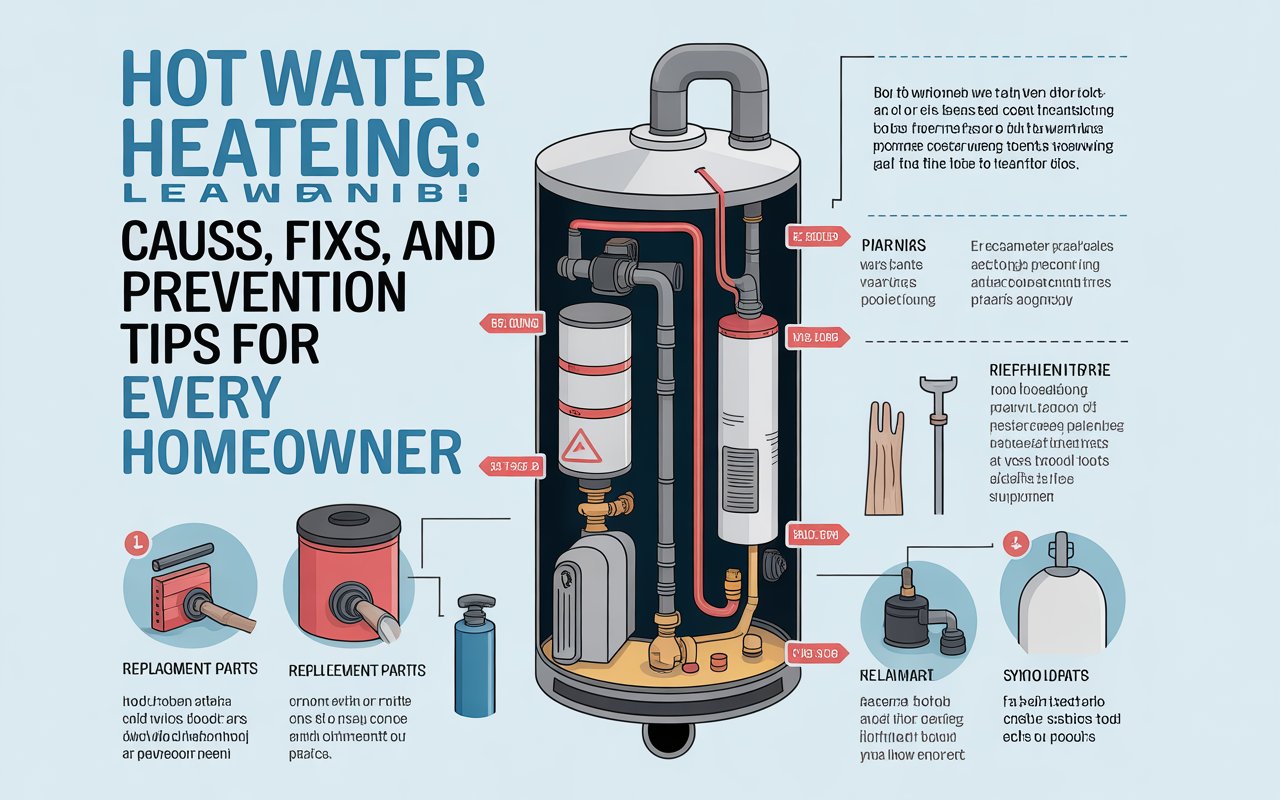
A leaking hot water heater can turn an ordinary day into a small household emergency. One moment, you’re enjoying a warm shower, and the next, you’re stepping into a puddle near your water heater wondering what went wrong. But don’t panic—leaks are common, and with a little understanding, you can often figure out the cause, fix it, or know when it’s time to call a professional.
In this detailed guide, we’ll explore why water heaters leak, how to identify the source, what you can do about it, and how to prevent future problems. Let’s dive in and turn your confusion into confidence.
Understanding Why a Hot Water Heater Leaks
Every home appliance wears down over time, and water heaters are no exception. Leaks usually happen because one or more internal or external components fail. Imagine your heater like a tightly sealed metal drum constantly exposed to heat, water, and pressure — eventually, something has to give.
1. Age and Natural Wear
Water heaters generally last 8–12 years. As they age, metal parts corrode, seals weaken, and pressure builds up. Tiny pinholes might appear in the tank or its fittings, slowly releasing water. Just like an old roof eventually leaks, an aging heater starts showing its age through moisture.
2. Corrosion and Rust
Over time, minerals and sediment accumulate inside the tank. This buildup encourages corrosion, particularly if the anode rod — a metal rod designed to attract corrosive elements — has deteriorated. When rust eats through the tank, leaks follow.
3. Loose Connections
Sometimes, the leak isn’t from the tank itself but from loose fittings. The inlet or outlet pipes that carry cold and hot water might loosen due to temperature fluctuations or vibration. Tightening these fittings can often stop the leak instantly.
4. Excessive Pressure
Water heaters are designed to handle pressure, but too much of it can cause leaks from the pressure relief valve or even crack the tank. If your water temperature is set too high or your home’s water pressure is excessive, you might be creating unnecessary strain.
5. Faulty Drain Valve
At the bottom of every water heater is a drain valve used for maintenance. If it’s not tightly closed or the seal inside it has worn out, water can drip continuously. While this might look minor, it wastes water and signals the need for attention.
Spotting the Signs of a Leaking Water Heater
Not every leak is dramatic or easy to see. Some start small and go unnoticed for weeks. Paying attention to the early signs can save you from costly water damage.
1. Puddles or Damp Floors
The most obvious indicator is water pooling around the base. However, condensation on the outside of the tank can also create a similar effect—so make sure to identify if it’s truly leaking or just sweating.
2. Rusty Water
If your tap water turns reddish-brown or has a metallic taste, that’s a red flag. It means corrosion is happening inside your heater, which may soon lead to leaks.
3. Unusual Noises
A rumbling or popping sound is often caused by sediment buildup. As the sediment layer thickens, it overheats and stresses the metal tank, increasing the risk of cracks.
4. Drop in Water Temperature
If your showers suddenly turn lukewarm, the leak could be allowing hot water to escape or damaging the heating element inside.
Locating the Source of the Leak
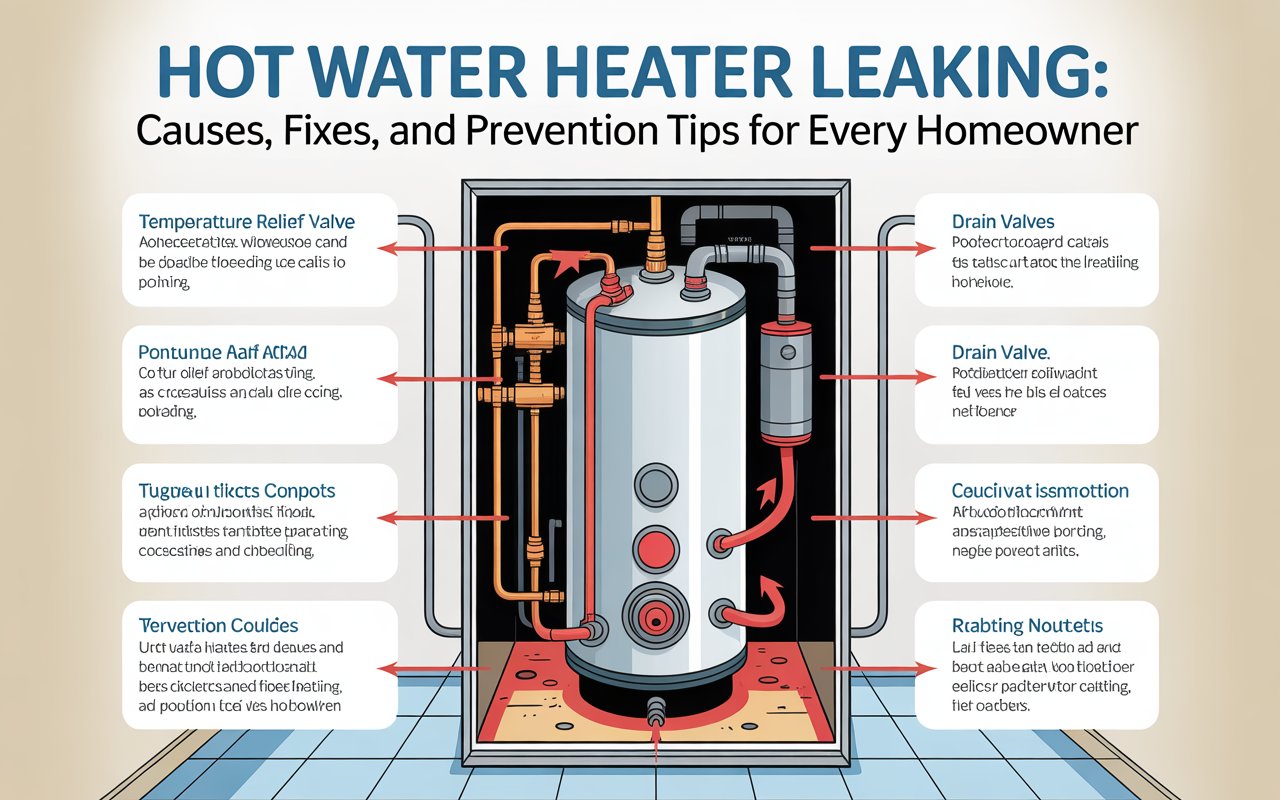
Before you start any repair, you need to pinpoint where the water is coming from. Here’s a step-by-step way to locate the source safely.
Step 1: Turn Off Power and Water Supply
Safety first!
-
For electric heaters, switch off the breaker.
-
For gas heaters, turn the gas control valve to the “pilot” position.
Then, shut off the cold-water supply valve located on top of the heater.
Step 2: Inspect the Top of the Tank
Look at the inlet and outlet connections. If the insulation around them is wet, you might be dealing with a loose fitting or a broken pipe.
Step 3: Check the Drain Valve
Examine the bottom valve for drips. Try tightening it slightly using a wrench, but avoid overtightening.
Step 4: Examine the Temperature and Pressure (T&P) Valve
This valve, usually on the side or top of the tank, releases water when the pressure inside gets too high. If you see moisture there, it might mean the valve is faulty or your tank pressure is excessive.
Step 5: Look Beneath the Tank
If water appears to be leaking from underneath and all other areas seem dry, the tank itself might be cracked or corroded — and unfortunately, that’s usually a sign you’ll need a replacement.
Common Causes and Their Solutions
Let’s break down the most frequent issues and how to fix them.
1. Loose Pipe Connections
Solution: Use a wrench to gently tighten the connections. If the pipe or fitting is damaged, replace it using Teflon tape or plumber’s sealant for a snug, waterproof seal.
2. Faulty Pressure Relief Valve
Solution: Check if water is dripping from the discharge pipe. If so, first test the valve by lifting the lever to release water, then let it snap back. If it continues leaking afterward, replace the valve.
3. Worn-Out Drain Valve
Solution: If the drain valve is dripping, attach a garden hose, drain the tank, and replace the valve. Plastic drain valves are more prone to leaking—consider upgrading to a brass one for durability.
4. Corroded Tank
Solution: Unfortunately, this is not repairable. Once corrosion starts eating through the tank’s walls, you’ll need to replace the entire unit.
5. Excessive Pressure or Temperature
Solution: Check the thermostat setting — ideally, it should be around 120°F (49°C). Also, install a pressure-reducing valve if your home’s water pressure exceeds 80 psi.
Temporary Fixes Until Help Arrives
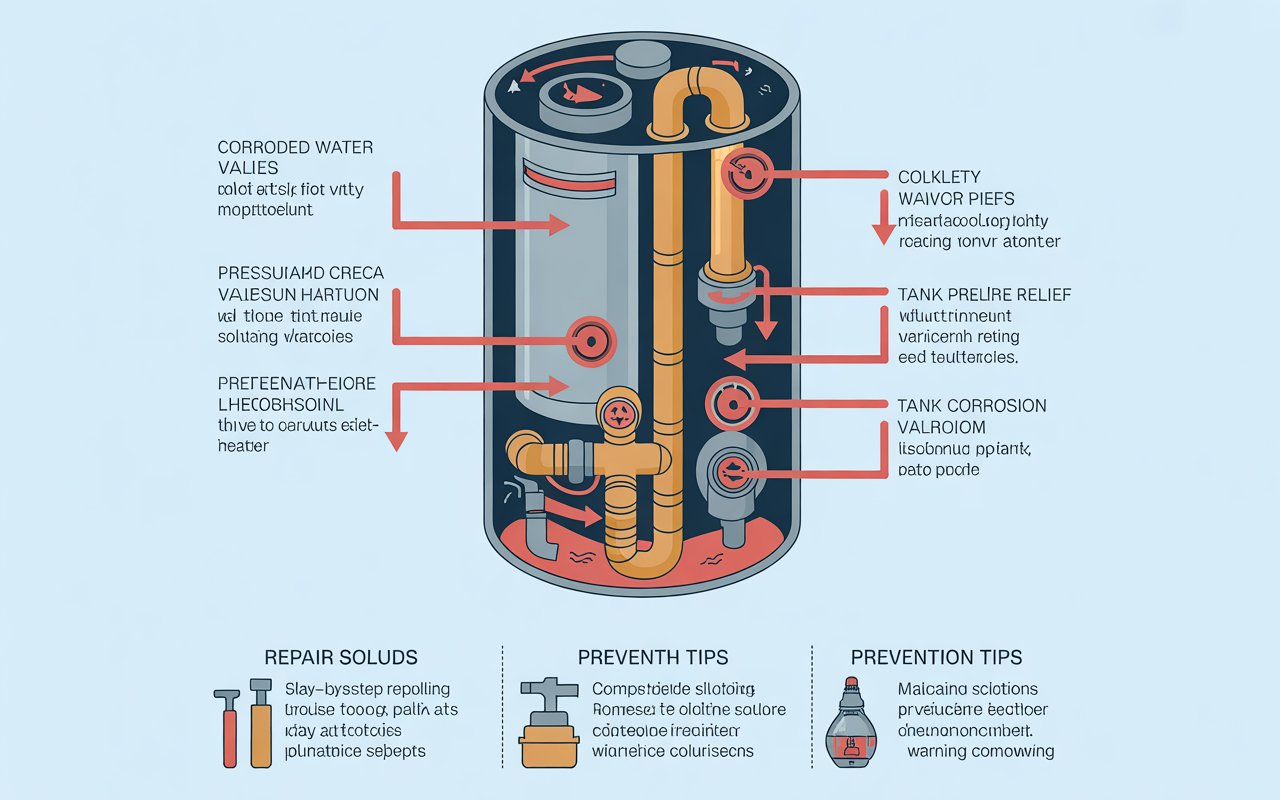
Sometimes, you need a quick fix before the plumber can arrive.
-
Turn off the water supply to stop further leaking.
-
Drain the tank partially to prevent flooding.
-
Use plumber’s tape or epoxy putty for minor leaks on fittings.
-
Catch dripping water using a bucket or towels to avoid damage to flooring.
Think of these as band-aids — they’ll help for now but don’t skip the full repair later.
When to Repair vs. Replace Your Water Heater
This is a question many homeowners face: should you fix or replace it? Here’s how to decide.
| Situation | Best Option |
|---|---|
| Minor leak from valve or pipe | Repair |
| Leak from tank or corrosion | Replace |
| Unit older than 10 years | Replace |
| New heater but minor fitting issue | Repair |
| High energy bills or inconsistent heating | Replace |
If your water heater is older and leaking from multiple spots, investing in a new energy-efficient model is usually more cost-effective than repeated repairs.
Preventing Future Leaks
Prevention is always cheaper and easier than repair. Here’s how to keep your heater healthy for years.
1. Flush the Tank Annually
Sediment buildup is the silent killer of water heaters. Flushing the tank once a year removes mineral deposits and keeps the system running smoothly.
2. Replace the Anode Rod Every 3–5 Years
This rod sacrifices itself to prevent rust in the tank. Replacing it regularly can extend your heater’s lifespan by several years.
3. Check Pressure Regularly
Install a pressure gauge on your water line and keep the reading below 80 psi. High pressure stresses your pipes and tank.
4. Adjust Temperature Settings
Keeping your water at 120°F prevents overheating, saves energy, and reduces pressure-related stress.
5. Inspect for Leaks Frequently
Make it a habit to look for small drips or dampness around your heater every few months. Catching leaks early prevents major problems later.
Energy-Efficient Alternatives
If you find yourself replacing your old heater, consider upgrading to a more energy-efficient system. Options include:
-
Tankless Water Heaters: Heat water on demand, saving energy and space.
-
Heat Pump Water Heaters: Use ambient air to heat water, reducing electricity use.
-
Solar Water Heaters: Harness sunlight, ideal for sunny climates and eco-conscious homeowners.
While the upfront cost may be higher, these systems pay off in energy savings over time.
How to Maintain Safety Around a Leaking Heater
Water and electricity are never a safe combination. A leaking heater can pose real hazards if not handled properly.
1. Electrical Safety
If your heater is electric, never touch it while standing in water. Turn off the circuit breaker before inspecting.
2. Gas Safety
For gas heaters, be alert for the smell of gas. If you detect any, leave the area immediately and contact your gas provider.
3. Structural Safety
Standing water can damage floors and foundations. Use fans and dehumidifiers to dry the area quickly after a leak.
Professional Help: When You Should Call a Plumber
You can handle small leaks, but for complex issues, professional assistance is best.
Call a licensed plumber if you notice:
-
Water leaking from the tank body
-
Persistent dripping even after tightening fittings
-
Rusty or discolored water
-
Leaks accompanied by hissing or popping sounds
-
Frequent tripping of your circuit breaker
Professionals not only fix the leak but also check for underlying issues that might cause future damage.
Environmental Impact of a Leaking Water Heater
A leaking water heater doesn’t just hurt your wallet—it affects the environment too. Continuous dripping wastes gallons of water daily, and if your heater runs on electricity or gas, energy waste increases as the heater struggles to maintain temperature.
By fixing leaks promptly, you conserve water, reduce energy consumption, and contribute to a greener home.
Conclusion
A leaking hot water heater might seem like a nightmare, but understanding the reasons behind it and taking timely action can turn things around. Whether it’s tightening a loose valve, replacing a worn part, or upgrading to a new system, small steps can save you from major headaches.
Think of your water heater as a marathon runner—it performs tirelessly every day, but it needs regular care to stay strong. A little maintenance, attention, and timely repair can keep it running efficiently for years.
FAQs
1. Can I use my water heater if it’s leaking?
It’s best not to. Continuing to use a leaking water heater can cause electrical hazards, pressure buildup, or water damage. Turn it off and inspect immediately.
2. How long does a typical water heater last?
Most last between 8 and 12 years, depending on usage, maintenance, and water quality. Regular care can extend its life.
3. What should I do first if my water heater starts leaking?
Turn off the power and water supply immediately. Then, locate the source of the leak to decide if it needs tightening, repair, or replacement.
4. Why is my pressure relief valve leaking water?
It may be due to excessive pressure or a faulty valve. Check your home’s water pressure and replace the valve if necessary.
5. Is it worth replacing my old water heater with a tankless one?
Yes, if energy efficiency, space saving, and long-term savings matter to you. Tankless heaters cost more upfront but use less energy and last longer.